Wine Importing Carbon Emissions: Part 3
In Part 1, we examined the carbon emissions from differing transport modes when transporting Rioja to Rutland. Of course, this isn’t simple, acknowledging this, in Part 2, we dove deeper into the complexities surrounding firstly carbon calculations and secondly balancing this with other business considerations such as cost and speed.
Having highlighted these challenges, it is only fitting that we should dive into practical steps that you as a business can take to get started reducing your emissions and optimising your wine supply chain.
1. Measure & Report Emissions
As the old saying goes, you can’t manage what you can't measure, so the first step is to establish a baseline. Track the carbon emissions produced by your current supply chain. Without starting to track your emissions, there is nothing to compare to as you make changes. As a starting point for transport legs, distance x Emissions Factor = Emissions, is a good start. With a clearer picture of where the emissions are across the supply chain, it is easier to identify areas for improvement.
Starting to track in greater detail can become complicated, as we’ve seen from parts 1 and 2, so it’s advisable not to do it alone. Your freight forwarders and logistics providers should be able to provide information for you across different transport modes so you can start tracking as accurately as possible.
While you may focus on a small section of the supply chain initially, it is advisable to start tracking across as much as you can as soon as you can. With increasing regulatory requirements and pressure from consumers demanding transparency around environmental impact, tracking carbon emissions is rapidly becoming a necessity rather than an option. Therefore, the sooner you start tracking the better.
2. Set a Threshold & Targets
Once you begin tracking emissions, the next step should be to outline the goals you would like to achieve. Setting a carbon threshold is a good way of setting a clear goal. This threshold acts as the new “maximum” emissions you are happy to accept as a business for your wine transportation. While there may be occasions when this limit is exceeded, this shouldn’t be the norm.
Every business is different and the way in which you set this threshold is likely to be also. For example, you may choose to set specific thresholds depending on the wine or region or apply a broader target across all of your wines. Tailoring thresholds based on product type, such as premium vintages vs budget-friendly wines is also an option.
Now that you are tracking emissions, and having reviewed the data available, it’s time to set realistic thresholds. You might aim for a percentage reduction in emissions such as 10% or a flat Kg Co2e amount. Setting a threshold rather than aiming for undefined, broad reductions ensures flexibility. Supply chains are complex, and factors such as cost, speed, and risk all play a role in logistics decisions and rightly so. You don’t want to be setting yourself up to fail, so instead set a realistic, measurable threshold that allows your business to balance these factors while still achieving meaningful carbon reductions.
3. Add Carbon to your Supply Chain planning
When optimising the transportation legs of your supply chain, there are many factors to consider. But it normally comes down to a few interlinked key things, cost, speed and risk management. For example, increasing the speed of getting your wine from A to B will often lead to a higher cost.
Finding the sweet spot to balance all of these factors is how you optimise effectively. Think of these factors as levers on a soundboard, where each can be adjusted based on the situation but are also all below a certain threshold. Rather than thinking of emissions after taking into consideration cost, speed and risk, add carbon emissions as another lever that is available to adjust but doesn’t go over that threshold that you set.
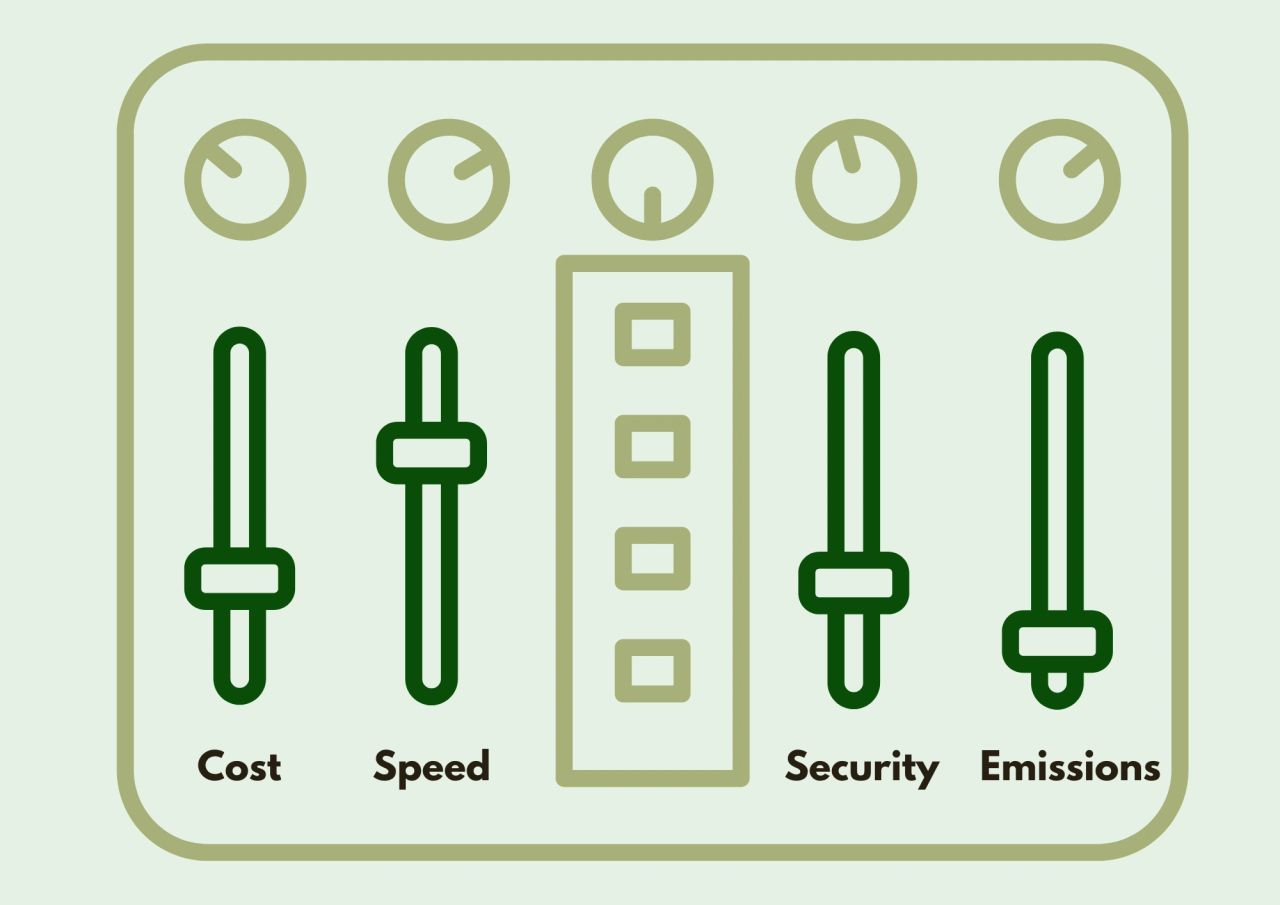
This is important because it allows the business to remain flexible but remain within target and enables you to adjust depending on the circumstances. Thereby allowing for some well-sophisticated optimisation as well as reaching your sustainability goals.
Challenge Your Freight Forwarders for solutions
As has already been established, supply chain logistics is complex and managing carbon emissions adds another layer of difficulty. This is why it is critical to work closely with your freight forwarders and logistics providers. A knowledgeable partner can help you save time, money and resources optimising your supply chain to fit your specific needs, and providing valuable guidance on what’s realistic for different routes and methods of transportation. If you aren’t getting the support you need or would like to discuss strategies you can put in place to optimise your supply chain, please book a call with our sustainability team, who would be happy to do their ‘Emissions HealthCheck’ with you and suggest solutions. We would be happy to help.
.svg)
.svg)
.webp)
.webp)