Wine Importing Carbon Emissions: Part 2
In Part 1, we analysed routes for transporting wine from Rioja to Rutland and evaluated the amount of kg Co2e they produced per bottle.
Here's a quick recap of the findings:
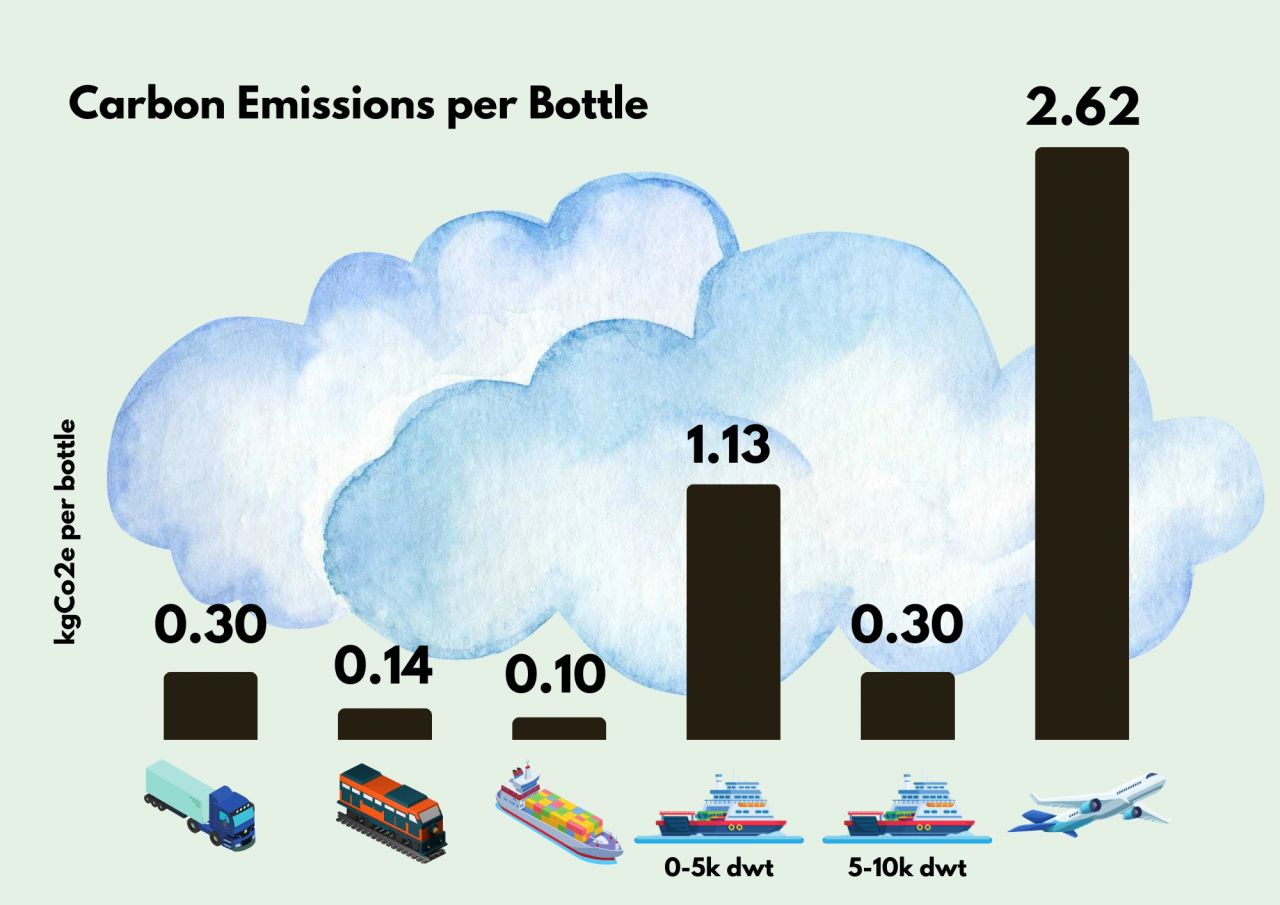
Container ships and trains emerged as the best options to minimise carbon emissions. Trucks, whilst necessary for the first and last mile are not ideal due to current reliance on diesel. RoRo ferries have higher emissions than one might expect. Planes are best to be avoided altogether. Figure 1 below shows the overall emissions of a route by the main mode of transport for that route. For example, 2.62kg Co2e for a plane includes the truck for the journey from Rioja to Madrid and the subsequent journey from London to Rutland as well.
As touched on in Part 1, whilst this analysis is helpful to start to draw a picture of the varying emissions for differing routes, it is however a simplified framing which doesn't fully reflect the reality. In the first half of Part 2, we will aim to provide insight into this complexity by diving deeper into some other factors impacting the carbon emissions of routes.
In the second half, we come to an arguably far more important aspect. Whilst many businesses would like to reduce the carbon emissions of their supply chains, this is not the same as always selecting the lowest carbon emission route. Optimising a supply chain for a wine importer requires a consideration of cost and speed, amongst other factors.
Carbon Complexities
The focal point of Part 1 was on carbon emissions from different transportation modes. However, various other factors can play a significant role in the amount of emissions produced on any given route. In some instances, the accumulation of these nuanced factors can turn an environmentally friendly one into one producing far more emissions than expected. So, what are the factors at play?
1. Weather and Route Conditions
For sea routes, in particular, the weather is an important factor. In our Rioja to Rutland example, the Bay of Biscay - located just about Spain, is notorious for its erratic weather patterns, particularly in the winter months. Bad weather can cause detours and unexpected emissions with increased fuel consumption as steering the optimal path becomes far more difficult. This is not just for ships either, trucks are impacted by this too, a little bit of light rain can increase fuel consumption by 0.2mpg to 0.3mpg due to increased rolling resistance and drive-train friction. Increased fuel consumption means an increase in emissions.
2. Speed, Delays, and Storage
Speed plays a crucial role in carbon emissions across all modes. For ships for example, due to the non-linear relationship between speed and emissions, one model has found a mere 1 knot increase from 16 to 17 knots could result in a 14% rise in emissions. Across all modes, conserving fuel will help reduce emissions but congestion and delays will cause it to increase. The modes with storage, such as at ports, will add to the carbon footprint as well - especially refrigerated storage, and this becomes even more acute if a shipment has to spend more days at the port due to delays.
3. Handling Emissions
All of our routes bar one had changes in mode across the route. Every time there is a switch of modes, there is an introduction of handling emissions. The more changes, the more chances of increasing emissions. That's not to say however that you should avoid changes, in some instances the reduction in emissions from having to change is still less than some alternative methods of transportation. The amount of handling emission also varies considerably. Ports, for example, are making progress in reducing their emissions, but the speed of this change differs depending on the port.
4. Packaging
In some instances, changing the packaging of transported goods can make a difference to the emissions picture. Rioja wine must be bottled in cellars at source and approved by the Rioja Control Board and as such cannot be transported as liquid bulk and then bottled at the destination, but that is not the case with all wines. There is also a consideration of how you pack the container. Whether you put it on a pallet, use wooden crates or how much protective padding you provide the wine, for example, would impact how many bottles you can fit into your container and therefore the emissions associated with each bottle.
5. Fuels, DWT and Variations
In part 1, fuel type was touched on, particularly concerning truck and train fuel. But even with a switch to electricity which could significantly lower emissions, not all electricity is produced cleanly and how cleanly it is produced varies depending on region. For shipping deadweight tonnage (DWT) also matters, the more deadweight the more cargo to split the emissions between. Variations in the transport themselves from the age of vessels to size also all impact the emissions picture. For aircraft in part 1 we chose to take an average aircraft but choosing between belly freight and cargo-only flights will again make a difference. Part 1 also touched on variations of RoRo ferry including a CoRo, but there are also differences between self-propelled and non-self-propelled vehicles impacting the number that can be shipped and therefore the emissions picture.
As is illustrated above, when it comes to considering areas impacting carbon it is complicated and is likely to leave you wondering how significant these variables are and what you need to look out for. Unfortunately, there is not a simple answer here and is best considered on a case-by-case basis. The reality is also how as a business you want to balance carbon with the other factors at play when optimising your supply chain.
Balancing Carbon with Other Business Priorities
When it comes to optimising your supply chain you want to consider more than just carbon emissions. As much as you may wish to choose the lowest carbon option it may be that the cost of doing so is too high. But cost isn't the only consideration, there is also how quickly you need your wine to arrive, a consideration of supply and demand, whether you have enough storage capacity and security of your wine.
1. Cost
Of course, this is a high priority for businesses and ensuring that the cost of a wine shipment is within a sustainable range is paramount. When it comes to transporting goods, it's not just the transportation costs themselves but customs fees, insurance costs, handling and warehouse fees. Each route will have different costs associated with it so looking at both these costs individually and as a package is vital to optimising effectively.
2. Speed
How quickly will it take for your wine to arrive? For some businesses which hold a larger proportion of stock available for its customers or order far enough out, waiting for the container ship may be perfectly acceptable. This is not always the case however and knowing the threshold of the acceptable lead time from vineyard to store (After the ageing process of course) is an important factor in determining the correct route for your business.
3. Supply, Demand and Storage Capacity
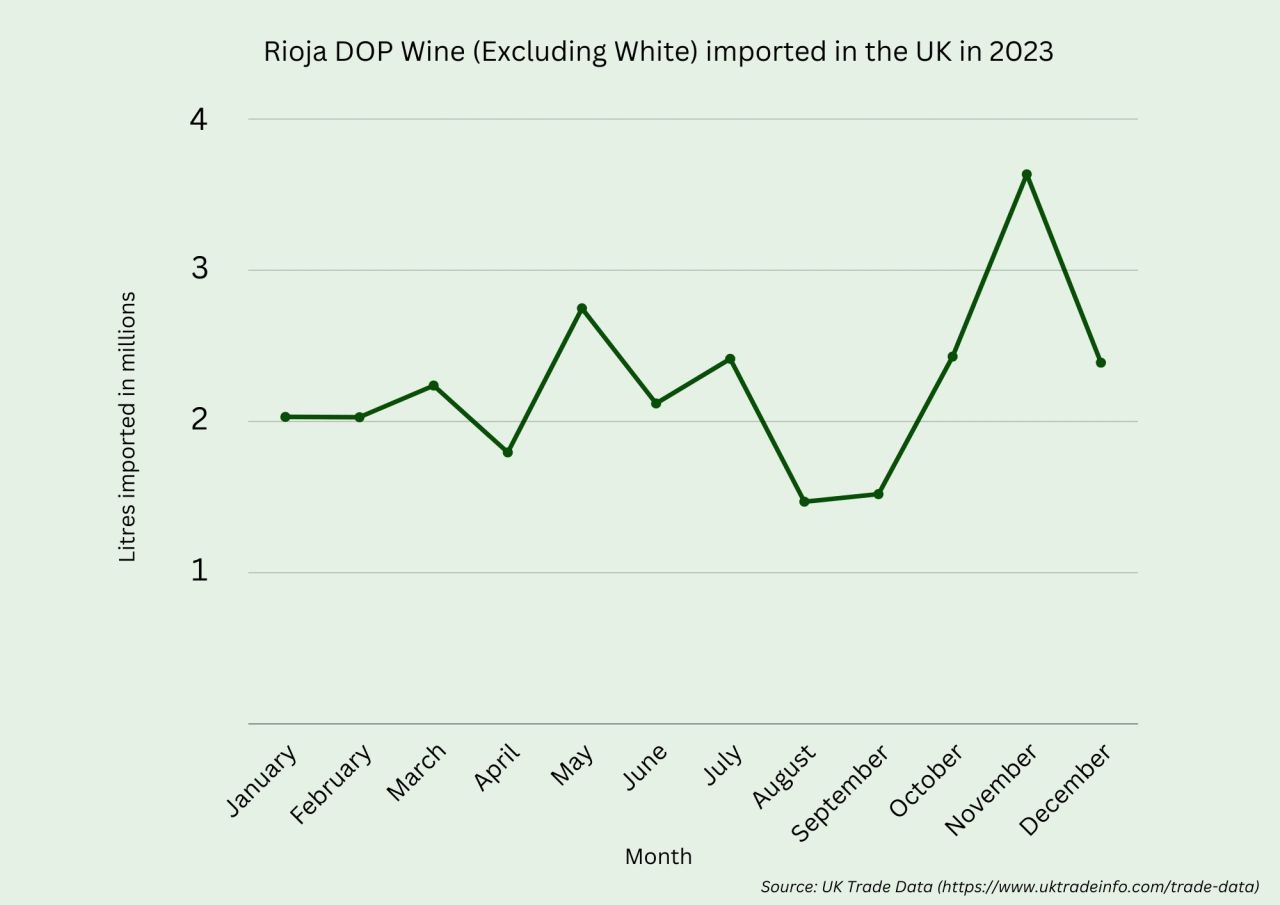
Like any industry there is of course a seasonality to demand and of course which wines are most popular. It can be seen clearly in the imports of Rioja over the course of a year as can be seen in Figure 2 with the peak before the festive period in particular. Much like prices change with supply and demand for products as does the price of logistics. Factoring in your own seasonality in the wine you provide in addition to the seasonality and peak periods of logistics is important. Of course there is also the reality of storage space available. Smaller businesses may of course not have the luxury of importing and holding a large amount of stock which will make the analysis of supply and demand even more critical.
4. Security and Risk Management
There's more to wine than just making sure it arrives. A mismanagement of temperature can completely ruin a good wine. With some modes, the ability to control this temperature is easier than others. Furthermore, each transport mode carries its own risks. For example, severe weather can cause damage and even loose containers from container ships. More handling of course also increases this risk as well. High-value goods tend to be flown to their destination because of the high security.
What's the solution?
Now that we've outlined carbon complexities and added a variety of other factors which a business would wish to consider into the mix when optimising its wine supply chain. You are probably thinking: Thank you for the confusion, now what do we do about it?
In short, you must strike a balance between all of these factors to work out what works for your business. Easy as that! Easy to say, but to do, less so. Fortunately, there are practical steps you can take to start making progress. In Part 3, we'll explore the practical solutions for optimising your Rioja importing.
.svg)
.svg)
.webp)
.webp)